
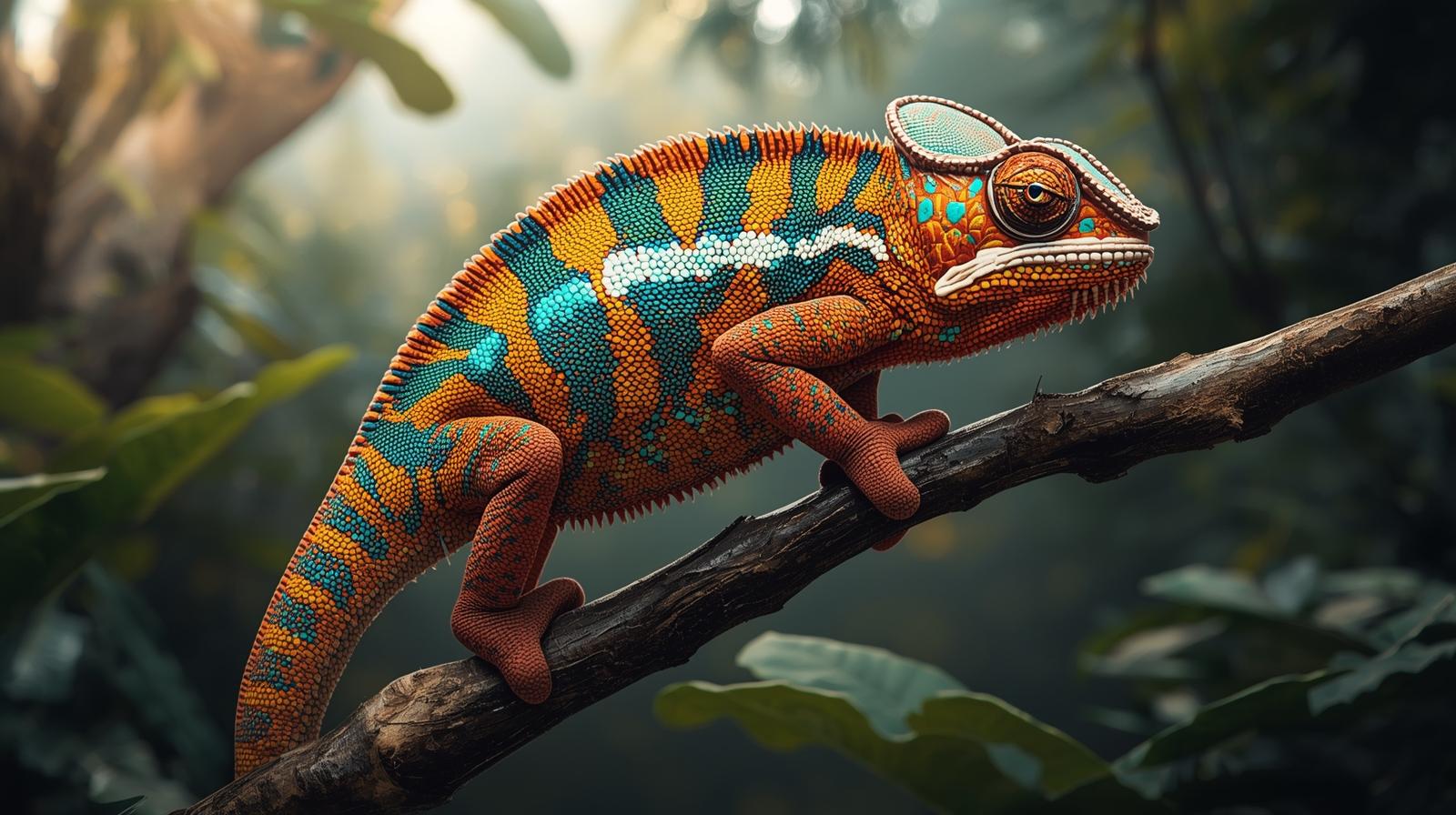

El historico Chameleonovite.
Ever wondered what can happen to some creatures and how they almost melt into their environment? Welcome to the amazing world of chameleenovites. Not only are these amazing reptiles masters of disguise, they are evolutionary marvels and have a treasure trove of unique traits, which scientists and nature enthusiasts are still fascinated by.
In this paper, we shall delve into the lives of chameleonovite, their physical appearance, their habitat, their behavior and even their use in the human culture. You will know by the end so why these creatures are real icons of adaptation and survival.
Evolution and Classification of Chameleonovite.
Taxonomy of Chameleónovité
The Chameleonovites are classified as members of the family Chamaeleonidae that comprises about 200 species. They belong to the order Squamata that includes lizards and snakes. In spite of certain similarities with other reptiles, chameleons are an exceptional group of reptiles, having their special adaptations such as colour-changing skin and zygodactylous feet.
Evolutionary Adaptations
Chameleónovitate did not turn out to be great all at once. The natural selection process, over millions of years, tended to select traits that made them more likely to survive, such as their independently moving eyes, prehensible tails and angle-shooting tongues. These characteristics enable them to hunt successfully, evade predators as well as communicate without straining a single muscle. Essentially, evolution had transformed them into a small camouflaged ninja of the reptile kingdom.
Physical Description of Chameleonovites.
Color-Changing Abilities
Chameleónovites are known by the color-changing skin. It is not merely to look good–a high-tech communication device. They change color depending on temperature, light, mood, and danger using specific cells known as chromatophores. You can have an internal mood ring, which will enable you to survive in the wild!
Eyes and Vision
The eyes of chameleónovites can move in all directions, and they have a 360-degree vision. This enables them to see both prey and predators without having to move their body. Others can even turn the eyes into one direction only to pivot them in the other direction, and thus judge the distance perfectly–an unusual power in the animal kingdom.
Tongue and Feeding Mechanisms.
The tongue of a chameleon is a marvel of the biomechanics. There are species that expel their tongue with a speed of up to 13 miles per hour and with remarkable accuracy catch their prey. Chameleonovites, insects to small birds, are general predators and do not use brute force, but wait, steal, and have time.
Habitat and Geographic Distribution.
Preferred Environments
The chameleonovites are very versatile and can live in a variety of places including the tropical forests and savannas and even in the semi arid desert. Trees are their home of choice as they are arboreal and their prehensible tails and clawed paws enable them to move around the branches with ease.
Global Distribution
Chameleonovitidae Chameleonoviti are found in Madagascar and Africa, with some species found in southern Europe, the Middle East, and some parts of Asia. The hotspot biodiversity center is Madagascar, a country with numerous species that cannot be found anywhere on the planet.
Behavior and Lifestyle
Social Behavior
Chameleónovite are in most cases solitary animals. They are also territorial particularly male ones who are colored brightly to show their dominance or to attract mates. There is little interaction, and where the interaction takes place, it is usually a theatrical performance of shifting colors and posing.
Reproduction and Lifecycle
In chameleonovitemaking love may be a splashy affair. The males tend to flaunt bright colors in order to attract the attention of females who are highly choosy of the mate. The majority of species lay eggs however, some give birth to live. Babies are small adults at birth that have already developed camouflage and hunting instincts to live in a dangerous environment.
Diet and Nutrition
Insects and Small Prey
The chameleonovites are mainly insectivores. Their food is mostly made up of grasshoppers, crickets and flies. They preys are snared with deadly precision with their projectile tongue, and the movement of the tongue may not exceed some centimeters.
Occasional Plant-Based Diet
Although insects are predominant food sources, certain species are supplemented by plant food. Fruits and leaves are also an addition to the nutrients and water especially in droughty seasons. Such adaptability in feeding would allow chameleonovite to live in changing conditions.
Chameleonovite in the Human Culture.
Symbolism and Folklore
Chameleonovites have been used throughout history as the symbols of the change and adaptation. They are usually described as tricksters or change agents in African folklore. Their ability to change color mysteriously has attracted both the storyteller and artists.
Chameleons as Pets
Having a chameleon as a pet is not an easy task. They also need special treatment, such as, regulated temperature, humidity and a diet that is rich in live insects. Even though they are fascinating to see, they make us remember that wild animals are in their natural environment, and it is important to be responsible.
Conservation Status
Threats to Survival
Chameleonovites are at risk of being destroyed, changes in climate, and being taken as pets. Madagascar has experienced deforestation, which has threatened the existence of a number of species located nowhere in the world.
Conservation Efforts
Conservation programs are centered on the protection of the habitat, breeding programs and awareness to the population. To make sure that these remarkable reptiles remain in their natural habitats, organizations in the world are striving to make sure that these extraordinary creatures remain in their natural habitats. We save not only a species, but an inheritance of the genius of evolution, by these attempts.
Interesting Facts about Chameleonovites.
-
There are chameleons that can turn color within a minute!
-
Some species have tongues that are longer than their bodies.
-
They can detect polarized light with an amazing ability thus enabling them to navigate through thick forests.
-
Although they are solitary, chameleonovites are able to convey the multi-layered messages by using slight color changes.
Conclusion
Chameleónovites are not just color-changing lizards, but are living metaphors of adaptability, life and evolutionary genius. Their interesting habits, peculiar physiology, and significance to the nature are what make them real wonders of nature. When we learn about and conserve the efforts of these remarkable reptiles, we pass the responsibility of making the future generations enjoy their beauty and wonder.